

Cloud computing is a way to remotely store and access data and programming that utilizes the internet rather than hosting information on your computer’s hard drive. Since cloud computing began, the world has witnessed an explosion of cloud-based applications and services in IT, which continue to expand. Cloud computing is adopted by every company, whether it is an MNC or a startup many are still migrating towards it because of the cost-cutting, lesser maintenance, and the increased capacity of the data with the help of servers maintained by the cloud providers. Cloud computing provides the speed, scalability, and flexibility that enables businesses to develop, innovate, and support business IT solutions.
To understand cloud computing better, let’s delve into its basic components and how it works.
Cloud computing works by using a network of remote servers to store, manage, and process data. These servers are connected together and perform different tasks depending on the needs of the user. The process starts when a user requests a service or access to data stored in the cloud. The request is then sent over the internet to the cloud server, which retrieves the data and sends it back to the user’s device. All of this happens in a matter of seconds, thanks to high-speed internet connections. To ensure the security and availability of data, cloud providers use various measures such as encryption, firewalls, and backup systems. This allows users to access their data safely and continuously without any interruptions.
Benefits of Cloud Computing:
1. Cost-Effective:
Cloud computing eliminates the need for investing in expensive hardware and infrastructure. Instead, businesses can pay for the services they use on a subscription basis, making it more cost-effective.
2. Scalability:
With cloud computing, businesses can easily scale up or down their resources based on their needs. This allows them to adapt to changing demands without the hassle of investing in new hardware or software.
3. Accessibility:
One of the key benefits of cloud computing is its accessibility. As long as there is an internet connection, users can access their data and applications from anywhere in the world. This makes remote work easier and more efficient.
4. Disaster Recovery:
In case of a natural disaster or system failure, cloud computing offers better disaster recovery options compared to traditional methods. Since data is stored remotely, it can be easily accessed and restored from any location with an internet connection.
5. Collaboration:
Cloud computing allows multiple users to access and work on the same data or project simultaneously. This promotes collaboration and improves efficiency within teams.
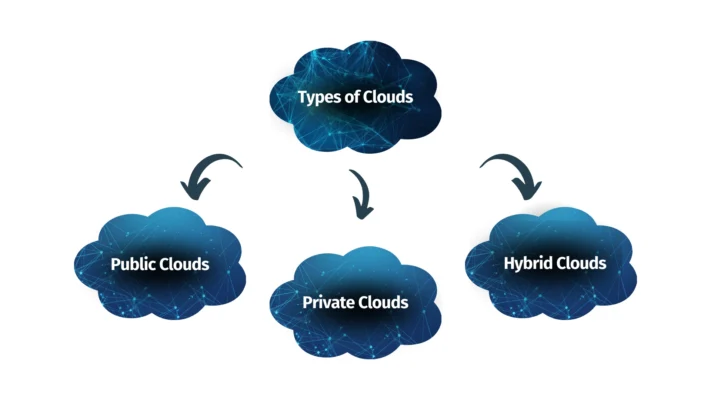
There are three main types of cloud computing – public cloud, private cloud, and hybrid cloud.
1. Public Cloud:
A public cloud is a type of cloud computing that is managed by a third-party service provider. These providers offer services to multiple clients over the internet. One of the main advantages of public clouds is that they are highly scalable and cost-effective. Popular examples of public clouds include Amazon Web Services (AWS), Google Cloud Platform (GCP), and Microsoft Azure.
2. Private Cloud:
As the name suggests, a private cloud is a type of cloud computing that is dedicated to a single organization. Unlike public clouds, private clouds are not shared with other clients or organizations. They offer more control and customization options for businesses that require higher levels of security and privacy. However, they can be more expensive to set up and maintain compared to public clouds.
3. Hybrid Cloud:
A hybrid cloud combines the features of both public and private clouds. It allows organizations to store sensitive data in a private cloud while using a public cloud for less sensitive tasks. This offers more flexibility and cost-efficiency for businesses as they can choose which tasks or data should be stored in which type of cloud.
Summary
To sum up, cloud computing services offer organisations the opportunity to transform their operations, enhance agility, drive innovation and improve cost-efficiency. Its benefits such as cost-effectiveness, scalability, and accessibility have made it a popular choice for businesses of all sizes. With technology constantly evolving, the time to make use of it has come. Don’t hesitate to use it your advantage!
